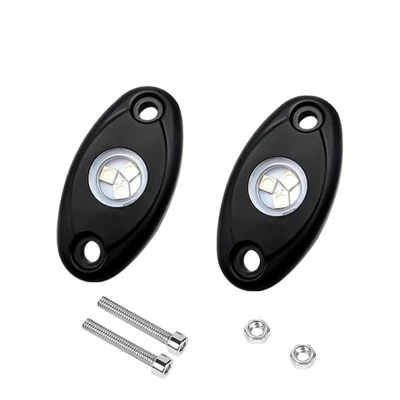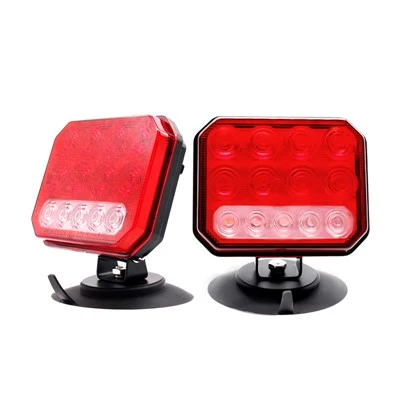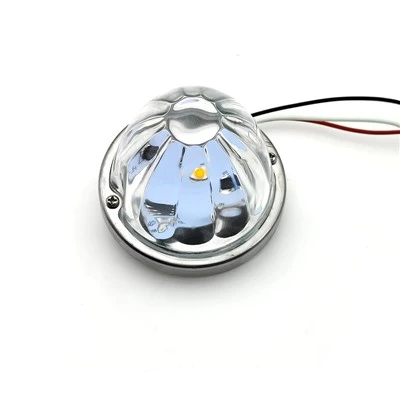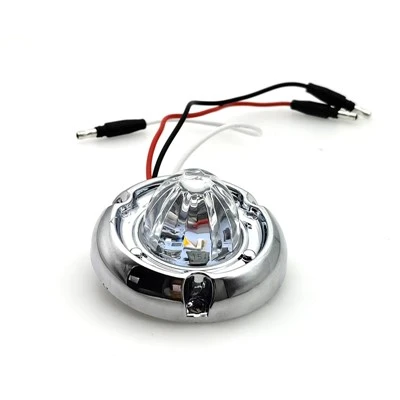

If you’ve ever spent time browsing truck accessory forums or cruising a lot at night, chances are you’ve spotted a watermelon glass light. Those round, vibrant lights—shaped like the summer fruit that gives them their name—have been a staple on big rigs, pickups, and even RVs for decades. For years, most people ran them with incandescent bulbs, but lately, LED options have popped up everywhere, and I’ve had so many customers hit me up asking: are LED watermelon glass lights actually better than the old incandescent ones? As someone who’s been supplying these bad boys for years—check out Watermelon Glass Lights for all the basic, solid options—I get why this question’s top of mind. No one wants to waste money on something that doesn’t deliver, right? Let’s break this down like we’re hanging out in a truck stop parking lot, no confusing tech jargon.
First off, let’s get one thing straight: watermelon glass lights aren’t just for show. Sure, they look cool, but they also serve a real purpose. On a big rig, they’re usually mounted on the front bumper, grille, or roof, making your truck more visible to other drivers—super important when you’re hauling 80,000 pounds down the interstate in the middle of a storm. For a daily driver pickup, they’re just a fun way to customize your ride and stand out at car shows. Incandescent bulbs were the original go-to, but they have some pretty big flaws that LED fixes. Let’s start with the biggest one: energy use. Incandescents waste so much power as heat. Like, 90% of the energy they use goes to producing heat, and only 10% actually turns into light. If you’re running four watermelon lights on your truck, that’s extra load on your alternator—something you don’t want when you’re already drawing power for your radio, GPS, and trailer lights. LEDs, on the other hand, are way more efficient. They turn almost all their energy into light, so they don’t drain your battery or alternator as much. That’s a big win for long hauls, trust me. I’ve had a guy tell me he used to get his alternator checked every six months because of all the incandescents he ran, and since he swapped to Watermelon Led Lights last year, he hasn’t had a single issue. That’s real-world stuff, not just marketing hype.
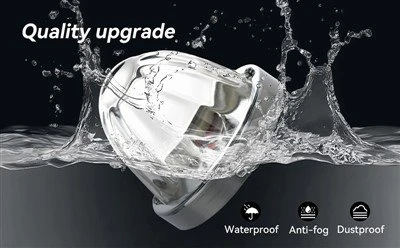
Next up, brightness and visibility. Let’s be honest, if your watermelon light is dim as hell at 2 a.m. on a dark highway, it’s basically useless. Incandescents might be bright when they’re new, but they fade fast. The filament inside burns out, and the glass can get foggy from all that heat, making the light even weaker. LEDs don’t have a filament—they use a semiconductor to produce light, so they don’t burn out suddenly. They also maintain their brightness for way longer. I’ve tested both back in my shop: an incandescent watermelon light might last 1,000 hours max, while a good LED one can go 50,000 hours or more. That’s like 5 years of daily use vs. 3 months. And don’t even get me started on extreme temperatures. If you’re driving in North Dakota in January, where it’s -20°F, an incandescent bulb can seize up or stop working entirely because the cold makes the filament brittle. LEDs handle cold way better, and they also work in heat—perfect if you’re hauling through Texas in July. For Peterbilt owners, specifically, those big rigs are out in all kinds of weather, so reliable lights are non-negotiable. If you’re a Peterbilt fan, check out Peterbilt Watermelon Lights for options made just for your rig, and most of those are LED now for that exact reason.
Wait, but what about the “cool factor”? A lot of people love watermelon lights because they glow that bright, juicy red or green—wait, no, wait, actually they come in a bunch of colors, right? Like amber, blue, even purple. Incandescents can only do the color of the glass, right? No, wait, some incandescents have colored bulbs inside, but they fade. LEDs can have built-in color, so the glow is consistent and doesn’t change over time. That’s why LED glass watermelon lights have been blowing up lately—check out Led Glass Watermelon Lights if you want something with vibrant, consistent color. Another thing: durability. Watermelon lights get bumped, scraped, exposed to road salt, dirt, water. Incandescents have that fragile filament, so if you hit a pothole, there’s a good chance you’ll break it. LEDs are solid-state—no moving parts—so they can take a beating. I’ve had a customer who’s an off-road enthusiast, runs his truck on trails all the time, and he swears by his LED watermelon lights. He’s broken three incandescents in the last year, and he hasn’t touched his LEDs since he installed them six months ago. That’s a huge plus for anyone who’s not just driving on paved roads.
But hold up, before you go swapping all your lights to LED, let’s talk about the downsides. I’m not gonna sugarcoat it—LED watermelon glass lights used to be way more expensive than incandescents. A set of four incandescents might cost you $20, while a set of four LEDs could be $50 or more. That was a turn-off for a lot of guys on a budget. But here’s the thing: over time, you save money. Because LEDs last so much longer, you don’t have to replace them every few months. Those incandescents might cost $20, but if you’re replacing them twice a year, that’s $40 a year, while the $50 LED set lasts 5 years. Math checks out, right? Also, some people say LEDs are too harsh—like, they’re bright to the point of being glare for other drivers. But that’s about the quality of the LED, not the tech itself. Cheap LEDs from random eBay sellers can be misaligned, so they shine right into oncoming drivers’ eyes. The good ones—like the ones I supply—are calibrated to be bright but not blinding, so they still do the job without annoying everyone around you. And another thing: if your truck has an old electrical system, some people have had issues with LED interference messing with their radio or GPS. But that’s rare, and usually easy to fix with a simple resistor or capacitor. I haven’t had a customer complain about that in years, since we started including the necessary adapters with our LED sets.
Let’s also talk about real-world use cases. If you’re a small business owner with a delivery van, you’re on the road 10 hours a day, 6 days a week. You don’t have time to pull over every month to replace a burnt-out watermelon light. LED is the way to go—less downtime, less hassle, safer for your drivers. If you’re a trucker crossing the country, you need lights that will hold up through rain, snow, heat, and thousands of miles. Incandescents might get you there, but LEDs will get you there reliably and save you money on maintenance. If you’re just a pickup owner who likes to show off your truck at local meets, LEDs give you that vibrant, eye-catching glow that lasts—no more dull, faded lights after a few months.
I started selling watermelon glass lights because I loved the culture around them—they’re not just accessories, they’re a way for people to make their vehicle feel like theirs. When I first got into this, everyone was running incandescents, but over the last 5 years, the shift to LED has been huge. I can’t remember the last time someone ordered a set of incandescent lights from me. Every customer asks about LED first, and for good reason. Let’s circle back to the original question: are LED watermelon glass lights better than incandescent? For almost every use case, yes. They’re more efficient, longer-lasting, brighter, more durable, and better in extreme conditions. The only time incandescents might make sense is if you’re on a super tight budget and only need the lights for a short time, even then, the long-term savings with LED are hard to beat.
If you’re ready to make the switch, or just want to browse the options, I’ve got all kinds of LED and glass watermelon lights in stock. Whether you need basic Watermelon Glass Lights for your daily driver, or custom Led Watermelon Lights for your Peterbilt, we’ve got you covered. I also work with fleet owners who need bulk orders, so hit us up if you’re looking to outfit your whole team. No matter what kind of vehicle you’ve got, upgrading your watermelon lights to LED is a small change that makes a big difference—both for your wallet and your peace of mind when you’re on the road.
References:

- U.S. Department of Energy. (2023). LED Lighting Basics. Retrieved from energy.gov
- Truckers News. (2022). Accessory Lights: LED vs. Incandescent for Long-Haul Drivers. Retrieved from truckersnews.com
- Automotive LED Lighting Association. (2023). Durability and Performance of LED vs. Incandescent Automotive Lights. Retrieved from ledlightingassoc.com