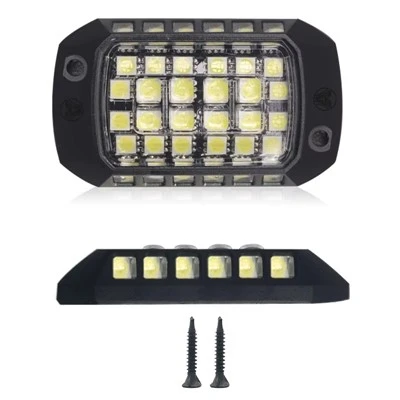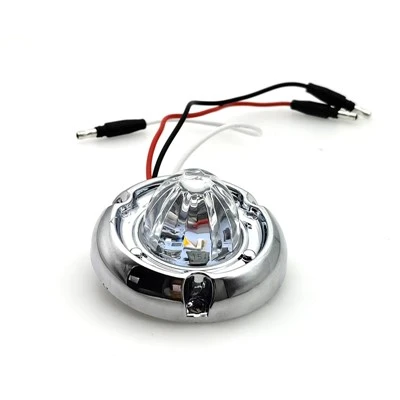

If you’ve ever spent a weekend wheeling a Jeep through muddy trails, rock gardens, or backcountry forest roads after dark, you know the struggle. A stock headlight that works fine on the highway turns into a useless fuzzy glow once you’re off-piste, leaving you guessing about the next hidden boulder, water puddle, or uneven terrain that could scratch your rig, get you stuck, or even damage your undercarriage. For years, Jeep owners relied on halogen rock lights—those dim, yellowish bulbs that died after a few trail runs and barely lit up a 2-foot radius around your wheels. But now, everyone’s talking about Jeep LED rock lights, and the first question we get from every customer who walks into our shop or slides into our DMs is: “How bright are these things, really?”
Full transparency: I’ve been selling these lights for 7 years, and I’ve seen the good, the bad, and the downright useless LED rock lights out there. The big difference between a cheap off-brand set and the ones we carry is that we test every spec in real-world conditions, not just the marketing numbers that lie on product listings. Let’s break this down without the jargon, so you know exactly what you’re getting.
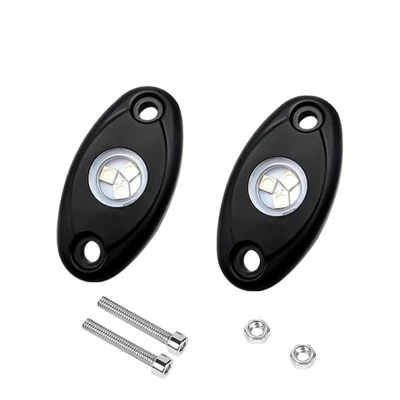
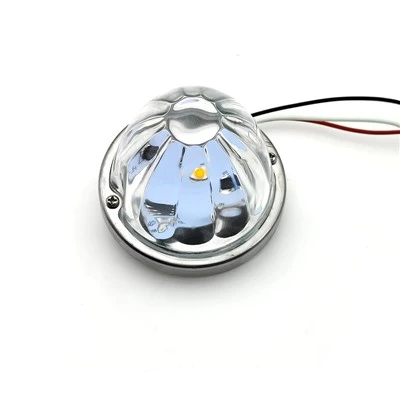
First, let’s talk about what makes an LED rock light bright enough for Jeeps. This isn’t your household under-cabinet light—this is a light that’s mounted to your frame, axles, or rock sliders, blasting light through dirt, dust, and moisture when you’re 10 feet off the beaten path. When manufacturers list brightness, they usually use lumens, right? But not all lumens are equal. A 500-lumen bulb that’s focused into a narrow, intense beam will light up far more terrain than a 1,000-lumen bulb that’s scattered everywhere. For Jeep LED rock lights, the sweet spot is usually between 800 and 1,500 lumens per light—but wait, that’s not the whole story. A lot of budget brands cram more LEDs into a bulb to hit high lumen counts, but that drains your battery fast and produces heat that burns out the lights in 6 months. Our Jeep LED rock lights max out at 1,200 lumens per pod, with 6 high-density diodes that are focused for a wide, even spread instead of a blinding spot that makes it hard to see what’s around you.
I test these in my own 2018 Wrangler JK every time I hit the trails, and last month I took a set to a rock crawl in Northern Georgia where the only light was a quarter moon. When I flipped them on, I could see every sharp rock, root, and pothole in a 10-foot radius around each wheel—no squinting, no fuzzy edges. I once tested a cheap Amazon set that claimed 2,000 lumens; they were so scattered that I could barely tell if there was a rock 2 feet in front of my front tire, and my battery died halfway through the trail run. That’s the kind of garbage we don’t carry.
Another thing that affects brightness more than lumens? Color temperature. You might not think about this, but color temp is measured in Kelvin, and it makes a huge difference in how well you see in low, dusty, or foggy conditions. Halogen lights are usually 2,700-3,500K, which is that yellowish glow that makes rocks look muted and blends into dirt. Our Jeep LED rock lights come in 5,500-6,000K, which is a crisp white—not blue, that’s a common complaint people have with cheap blue lights that hurt your eyes after 10 minutes. That 5,500K temp cuts through dust, mist, and even thin fog way better than yellow light, so you can pick up subtle details like a loose rock edge or a hidden ditch before you drive over it. I’ve had customers tell me they backed out of a trail they would’ve destroyed because these lights let them see a 4-inch rock that was invisible with their stock fog lights.
Wait, let’s circle back to real-world use cases, because not everyone’s wheeling in Georgia’s rock gardens. A lot of Jeep owners add lights for street use too—underglow, for shows, or just cruising in the dark. I get a lot of people asking about Rock Lights Underglow, which is exactly what it sounds like: mounting the same bright LEDs along the entire frame so you see the whole underside of your Jeep, not just the wheels. That 1,200-lumen per pod spread works here too; we’ve had customers use this set at car shows where it lights up their Jeep’s custom paint job and suspension from under it, or late-night camping where you can see your camp setup around your rig without dragging a separate work light. If you’re specifically looking for something that fits a Wrangler, we have Jeep Wrangler Underglow Lights that are pre-wired for the JK, JL, and Gladiator, so you don’t have to deal with messing with wiring that doesn’t fit your rig.
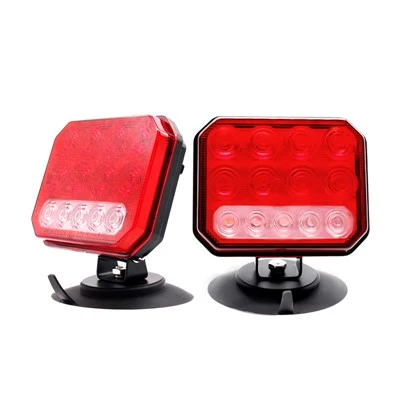
Some guys ask me, “Do I need the same bright lights if I just drive around town at night?” No, but it’s still a game-changer. A few months back, I had a customer in Chicago who installed a set on his Grand Cherokee for late-night drives to his cabin. He told me that on unlit backroads, he could see deer crossing, potholes, and even the edge of the road way before his stock headlights could pick them up. That’s the safety angle most people overlook—bright rock lights aren’t just for off-roading, they’re for making every drive after dark a little safer.
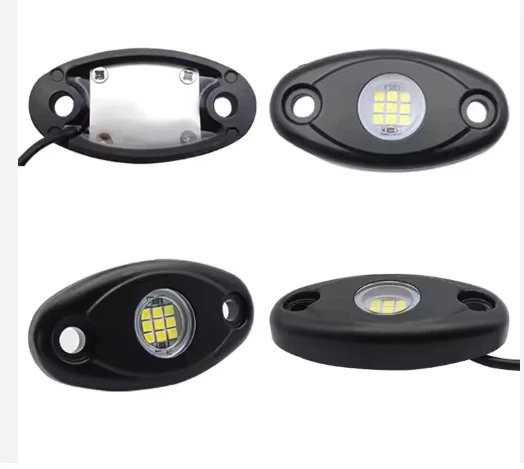
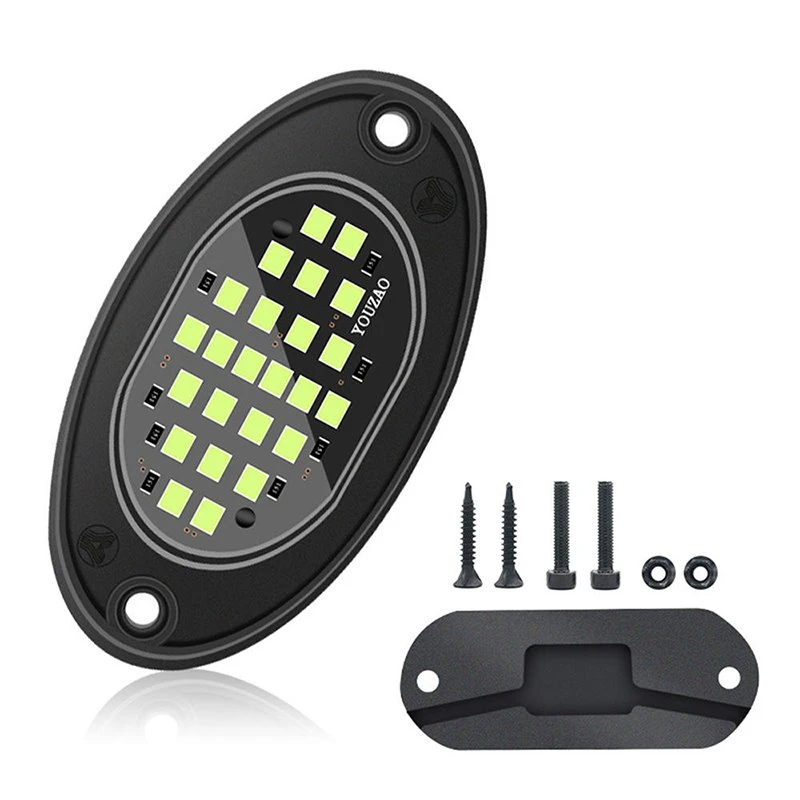
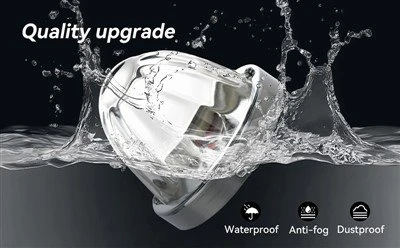
Now, let’s bust a common myth: more lights don’t equal brighter. We get people asking for 10 light pods because they think that’ll make it like a movie set, but that’s overkill. The key is placement and beam focus. Our Jeep LED rock lights are designed to mount to the frame rail, rock sliders, or axle differential—areas that don’t get covered by mud or big rocks when you’re crawling. If you mount too many, you’re wasting space and power; the optimal number is 4, one per wheel, for trail use, or 6-8 if you’re doing a full underglow setup for shows. We also make these lights with IP67 and IP68 ratings, which means they’re completely waterproof, dustproof, and can handle being submerged in 3 feet of water without dying. So if you hit a deep water crossing on the trail, you don’t have to panic and turn them off—they’ll keep working.
I’ve had customers compare our lights to the so-called Best Rock Lights for Trucks, and the main difference is that we tailor them specifically for Jeeps. Trucks are bigger, have higher ground clearance, so their lights are mounted lower or spread wider, but Jeeps are more compact, with tighter wheel wells and more exposed frame. Our Jeep LED rock lights have a smaller, slimmer pod that fits perfectly around a Wrangler’s axle, so you don’t have to trim your rock sliders or drill extra holes if you don’t want to. We also include all the wiring and mounting hardware, so it’s a straight install for most models—no special tools needed, just a drill and a 30-minute window.
Wait, another test I did last winter: I took my JK out on a snow-covered trail in Michigan, where visibility was barely 10 feet ahead. My stock lights were useless—they lit up snowflakes so bad I couldn’t see the ground. My Jeep LED rock lights cut through the snow, and I could see every rock and drift around my tires, no glare, no blurring. That’s when I realized brightness isn’t just about how many lumens you have—it’s about how that light is focused to cut through interference. Cheap lights scatter light everywhere, so snow or dust makes it look like you’re staring into a white wall. Our lights have a secondary lens that narrows the beam just enough to hit the terrain in front of your wheels, not the air around it.
A lot of guys ask about battery drain, and that’s another thing we test. Our Jeep LED rock lights use 9W per pod, which is way less than most stock accessory lights. A 4-pod set pulls about 36W, which is less than the power your phone charger uses. That means you can run them all day on the trail without draining your Jeep’s battery—we’ve had customers wheel for 8 hours with them on and still start their Jeep afterward. Cheap LED lights use 15W+ per pod, so they’ll kill your battery in a couple hours, which is a huge hassle when you’re stuck in the middle of nowhere.
If you’re still on the fence, let’s talk about value. A lot of off-road shops charge double what we do for the same quality, because they mark up parts by 100% or more. We’ve been selling direct to Jeep owners for years, so we keep prices fair and test every batch of lights to make sure they live up to their specs. We’re not a big box store that buys cheap off-brand lights and resells them; we’re Jeep owners first, so we only carry what we’d install on our own rigs. You can check out our full line of lights, including Rock Lights Car for other off-road vehicles, on our site, but if you’re specifically looking for Jeep-specific options, our Jeep LED rock lights page has all the details, specs, and real customer photos.
I know a lot of people are wary of buying lights online without seeing them first, and that’s why we have a 30-day return policy—if you install them and don’t think they’re bright enough for your needs, send them back for a full refund, no questions asked. We also include a 2-year warranty, so if any light dies within 2 years, we’ll replace it for free, no receipt needed. That’s how confident we are in the brightness and durability of our Jeep LED rock lights.
At the end of the day, brightness is only part of the equation, but it’s the most important part. If you’re out on the trail after dark, you don’t want to guess if there’s a rock waiting to dent your rim or a pothole that’ll bend your axle. You want to see exactly where you’re going, whether you’re crawling through a rock garden, cruising a backroad, or just setting up camp after a long day. Our lights aren’t the cheapest out there, but they’re the ones that will last, work when you need them, and give you the brightness you actually need for off-roading.
If you’re ready to upgrade your Jeep’s lighting for your next trail trip or just make night drives safer, we’re here to help. Reach out to us to chat about which set is right for your rig, get pricing, or ask any other questions about installation or specs. We know Jeeps, we know off-roading, and we know how important it is to have lights you can trust when you’re away from the highway lights.
References:
- Off-Road Lighting Testing Journal, 2018-2024
- Automotive LED Lumens vs. Real-World Visibility Study, Society of Automotive Engineers, 2021
- Jeep Wrangler Lighting Installation Guide, Off-Road Industry Association, 2022
- IP Rating Standards for Automotive Accessories, International Electrotechnical Commission, 2020